
The Big Four: Why Squats, Hinge, Push & Pull Movements Should Be in Every Program
At the Body Engineers, we design training programs around movements that create the biggest return on your efforts. This includes exercises that stimulate the most muscle growth, improve body composition, support joint health, and make everyday life easier. These foundational patterns are essential for anyone interested in strength training, functional fitness, group classes or personal training in Toronto.
Among all the exercises available, there are four primary movements that should be mastered in the gym:
Squat
Hinge (hip dominant bending movement)
Upper Body Press
Upper Body Pull
These movements are efficient, technical, scalable for all fitness levels, and collectively train all the major muscle groups of the body.
In this blog we are going to focus on one variation for each of the movements: the barbell back squat, trap bar deadlift, dumbbell flat press and neutral grip pull-up.
1. Barbell Back Squat
The barbell back squat is widely known as the king of lower-body movements. It targets every major muscle below the waist; the quads, glutes, hamstrings, adductors whilst also demanding core stability and back strength, especially from the erector spinae. This makes it one of the best leg exercises for lower body strength, muscle building and compound exercise benefits.
Key Benefits of the Barbell Back Squat:
Builds Lower-Body Strength & Muscle: Squats produce some of the highest levels of muscle activation of any leg exercise.
Improves Mobility: Squatting through a full range of motion trains hip, knee, and ankle mobility (something most adults lose over time).
Supports Hormonal & Metabolic Health: Large muscle engagement results in a higher calorie burn and improved metabolic function.
Real-Life Carryover: Getting in/out of a chair, climbing stairs, lifting, walking - squatting has a direct impact on everyday movements.
Highly Progressive and Measurable: Whether you perform a barbell squat with a straight bar, safety bar, or box squat variation, it can be tailored to beginners all the way to experienced lifters.
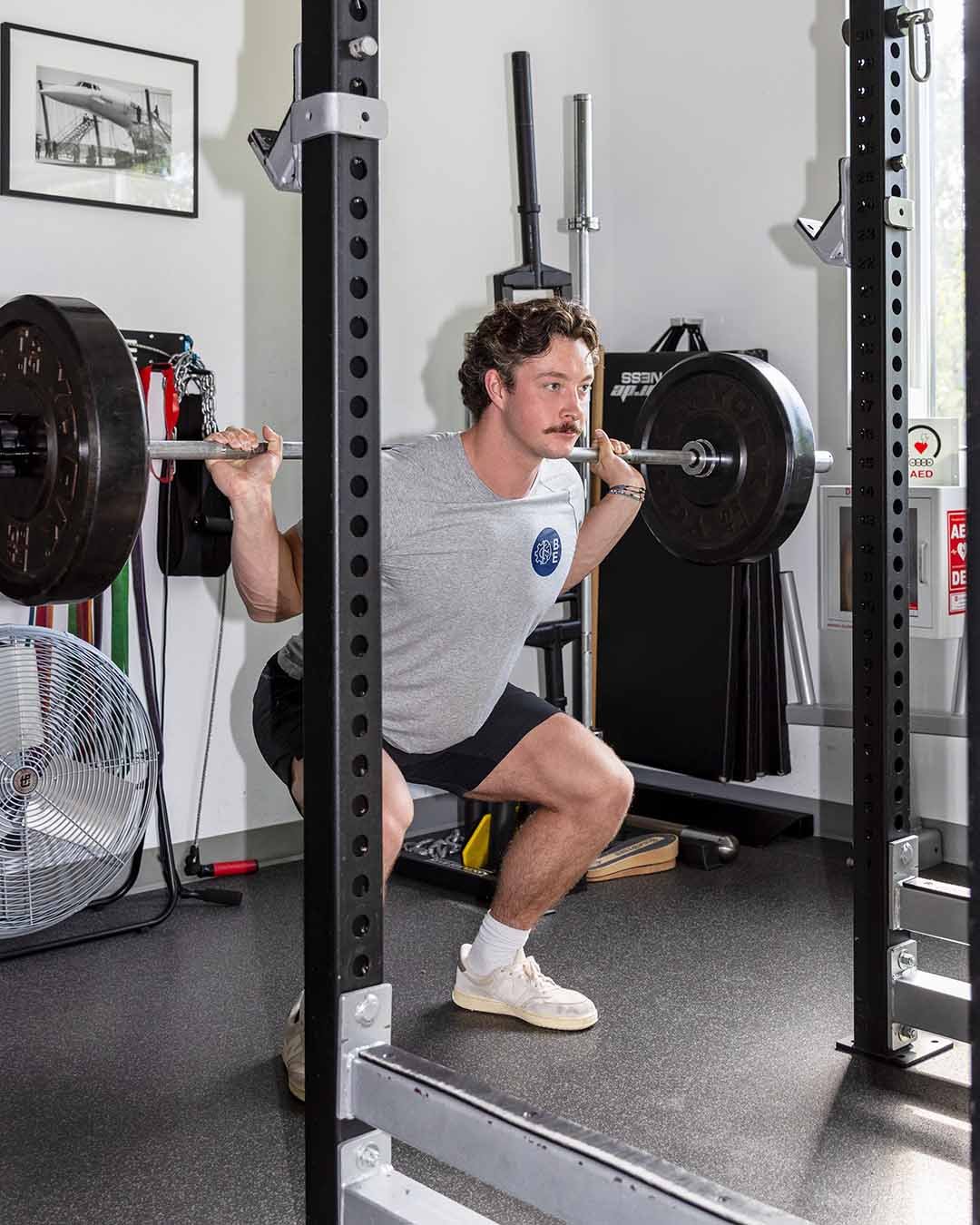
Personal Trainer Connor Performing the Barbell Back Squat

Barbell Back Squat from the Front View
2. Trap Bar Deadlift
The trap bar (aka Hex bar) deadlift trains the glutes, hamstrings, quads and upper back, while placing significantly less stress on the lower back compared to straight-bar deadlifts. Although a relatively similar movement to the squat, the trap bar deadlift requires a lot of upper body strength to stabilize the shoulder blades and spine.
Key Benefits:
Safer for Most People: With the grip position at the sides, rather than in front (as is the case with a traditional deadlift), the centre of mass is closer to the lower back thereby reducing lumbar stress making it a great deadlift alternative and a more lower back friendly exercise compared to other variations.
Builds Total-Body Strength: Engages the musculature of the entire posterior chain including the glutes, hamstrings and back. It also engages the core and quadriceps.
Great for Posture: when properly executed this exercise will train the shoulder and back muscles helping you stand up taller with the scapula more retracted.
Boosts Power Production: Studies show trap bar deadlifts produce higher peak power than straight-bar versions.
Great for Beginners & Advanced Lifters: Relatively easy to learn and easily loadable.
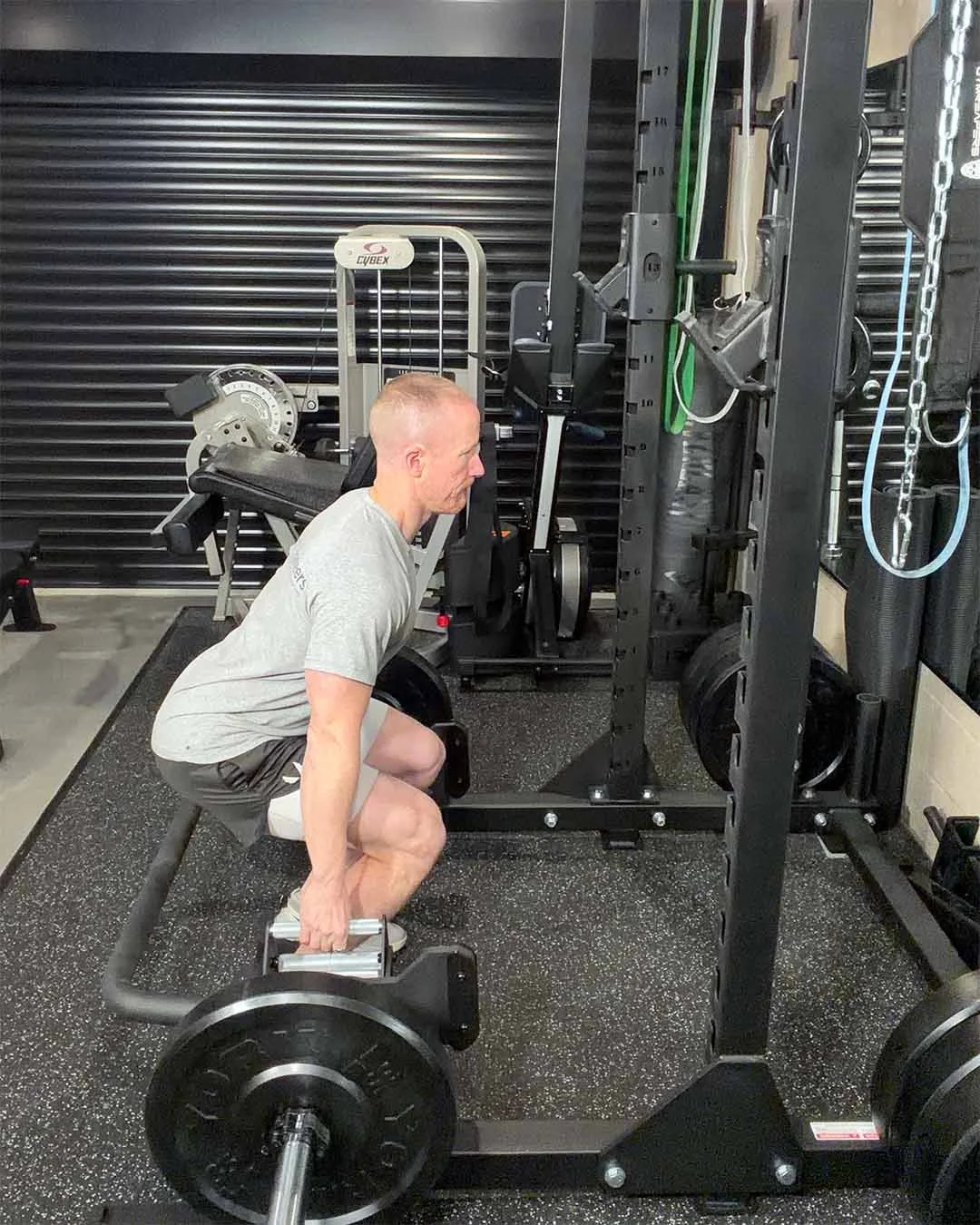
The Trap Bar Deadlift at the start position

The Trap Bar Deadlift at the top position
3. Dumbbell Flat Press
The dumbbell flat press is a fundamental upper-body pressing movement particularly effective at targeting the chest muscles. With only a bench and dumbbells required, it can be performed in virtually any gym making it a favourite among those looking to build upper body strength and improve pressing mechanics.
Key Benefits:
Muscle Targeting: This exercise is best at targeting the chest compared to the incline variations.
Safer Range of Motion: Doesn’t involve extreme ranges of motion, so it is generally safer than a decline, incline or standing press.
Flexible Path of Motion: The path of motion can be varied to target slightly different areas of the anterior upper body muscles.
Reduces Muscle Imbalances: Each arm must control its own weight, preventing dominance from the stronger side.
Builds Functional Pushing Strength: Translates to real-life tasks and sport movements.
Accessible to Everyone: It is great for both beginners and advanced lifters, and is easily progressed with weight, range of motion, tempo, or angle variations.

The Dumbbell Flat Press at the bottom
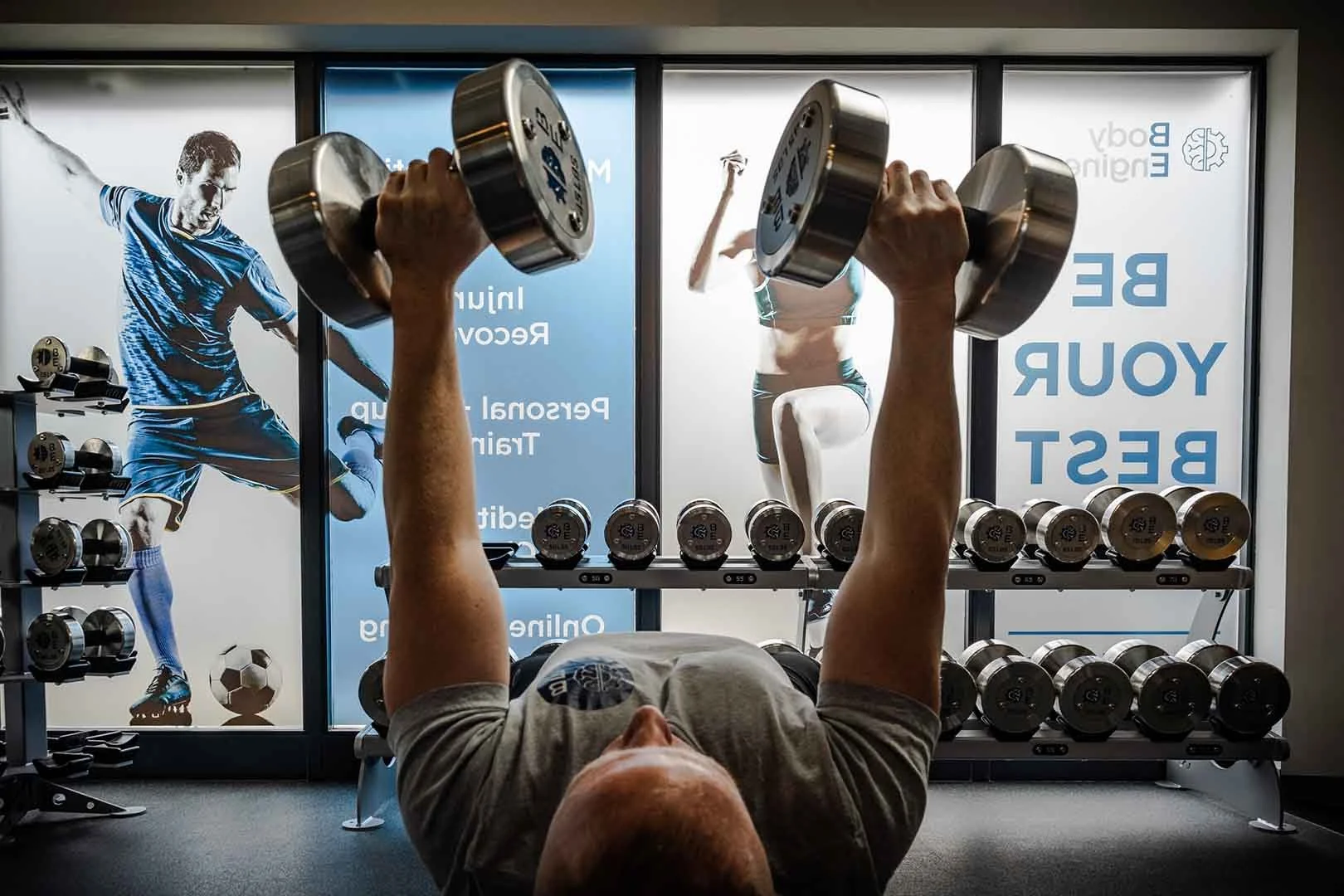
The Dumbbell Flat Press at the top
4. Parallel Grip Pull-up
The neutral-grip pull-up is a very challenging but fun and rewarding exercise. Being able to perform a bodyweight pull-up always ranks high amongst strength goals in the gym and is a great measure of upper body strength relative to bodyweight. This pull-up variation utilizes the parallel, close grip pull-up handles.
Key Benefits:
Easier than Other Variations: Since the grip position is closer to the shoulder joint, it is easier to perform than other wider grip variations.
Develops a Strong Back & Arms: This exercise will target the lats, rhomboids and biceps predominantly.
Develops Scapula Control: When done properly, the pull-up will develop proper movement and engagement of the scapula muscles.
Highly Scalable: Can be performed with assistance, bands, or progressed to weighted pull-ups.
Vertical Pull Motion: trains the scapula to rotate upwards and downwards under force which is important for shoulder health, along with the horizontal row variations.

The Parallel Grip Pull-Up at the Bottom
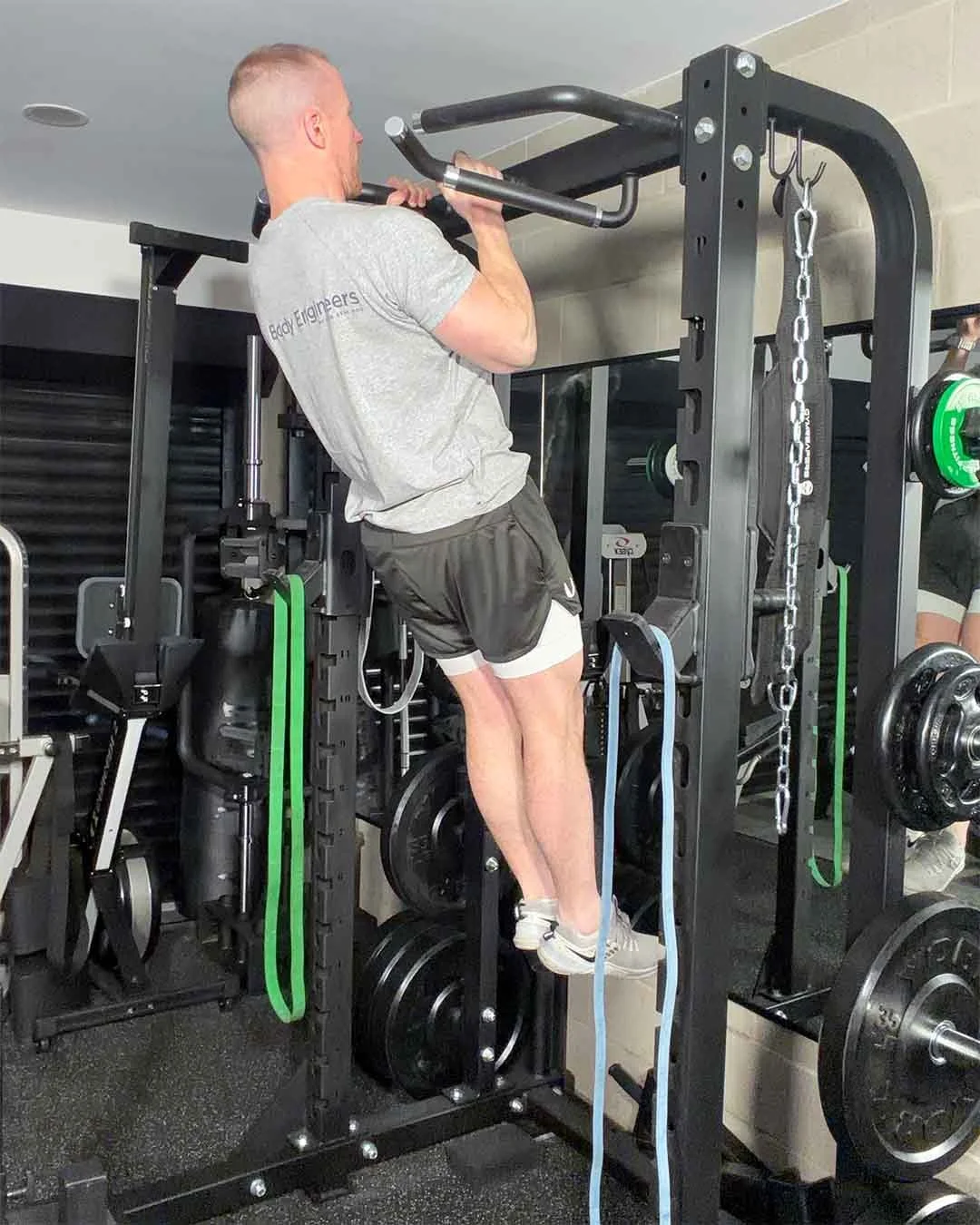
The Parallel Grip Pull-Up at the Top
Conclusion
These four movements aren’t just gym staples, they are the foundation of full-body strength, real-life capability, and long-term joint health.
Whether your goal is fat loss, muscle gain, improved confidence, or better athletic performance, mastering these movements will move you closer to your best self.
Want to test and improve your strength in these four movements over 8 weeks and see what you can achieve?
Sign up for our 8-week challenge starting January 5th, 2026. For more details click here.
If you missed the challenge but want help with developing full body strength contact us or schedule a call.